Real-Time Working Model Demonstrations Built With Precision & Innovation
Choosing the right working model manufacturer matters when your demonstration must be technically accurate, visually clear, and dependable day after day.
More than two decades of experience in engineering model manufacturing and customized working model development.
We work with drawings, process diagrams, control logic, and specifications to understand how the system operates before building the model.
Every demo can be tailored to scale, mechanisms, lighting, sequences, interaction, branding, and display environment.
Our approach combines physical fabrication with motors, LEDs, sensors, controllers, and displays under one project team.
Demonstration sequences can be programmed, timed, and adjusted so that each stage of a process is shown clearly and in the right order.
Demos can include touch screens, push buttons, selectable scenarios, and responsive displays that invite audiences to participate.
From requirement analysis and design to fabrication, programming, testing, delivery, installation, and commissioning, we support the complete demo-development process.
Working models are tested through repeated operation to help ensure dependable performance in exhibitions and long-term installations.
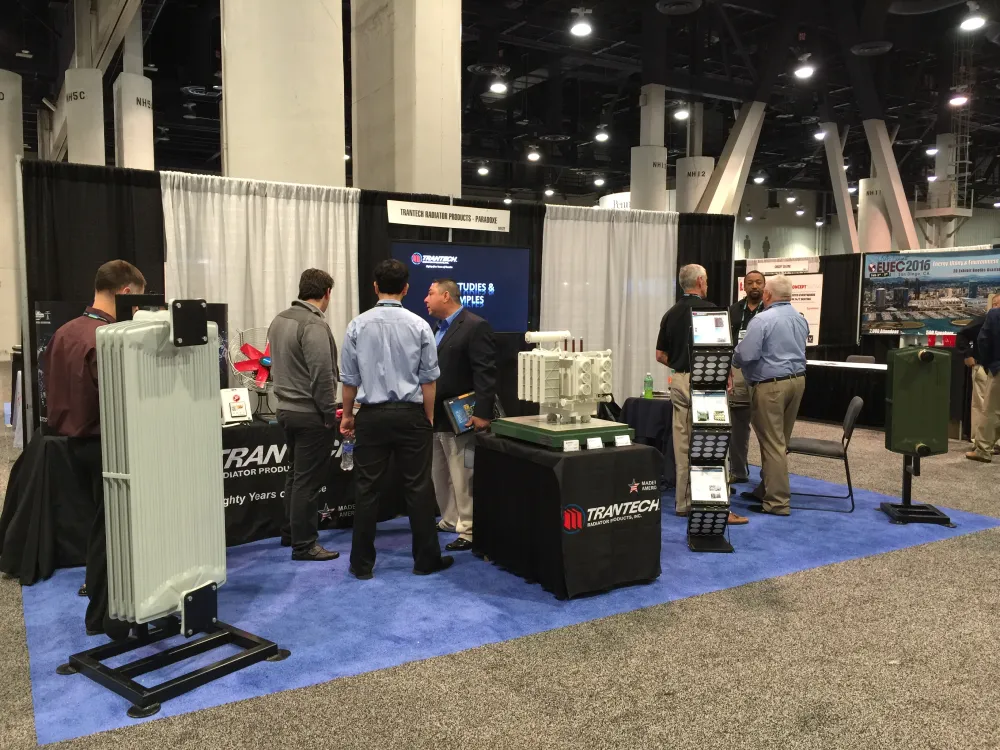
With more than 20 years of experience, we combine engineering expertise, 3D CAD development, precision fabrication, electronics and control integration, programming, and professional finishing to transform complex engineering processes into live physical demonstrations.
Precise Engineering Models specializes in the design and manufacturing of real-time model demonstrations, working physical models that show how engineering systems, processes, and
equipment operate as they happen, for industrial, manufacturing, infrastructure, energy, mechanical, educational, and technical applications.
Our real-time demo models help organizations show rather than tell, letting audiences watch systems operate, follow process sequences, and interact with engineering concepts directly.
A real-time model demo is a working physical model that demonstrates how a system, process, machine, or facility operates, with movement, lighting, sequences, and in many cases, visitor interaction happening live in front of the audience.
They go beyond static display by showing cause and effect: material moving through a plant, a mechanism turning, a process stage lighting up, or a control action producing a visible result.
At Precise Engineering Models, we develop real-time model demos for applications such as:
Depending on the application, demos can be developed as automated sequence models, interactive touch-controlled models, push-button demonstration models, or control-integrated simulation models.
Industrial models are physical representations of industrial facilities, machinery, processes, production systems, products, and engineering environments.
They provide a tangible way to understand relationships that can be difficult to communicate through drawings, photographs, presentations, or digital screens alone.
A well-designed model can show:
Precise Engineering Models develops both static and working industrial models, depending on the project's objectives and technical requirements.
As an experienced working model manufacturer, we understand that every demonstration has a different story to tell. A process demo for operator training needs different behaviour from an exhibit for a visitor centre.
Our custom approach focuses on translating operating information into reliable, clear, and engaging live demonstrations.
We can work with:
Our team evaluates the available information to determine the appropriate scale, mechanisms, lighting, control approach, level of interaction, and display format.
The objective is to deliver demo models that combine technical accuracy, clear storytelling, reliability, and presentation quality.
Working models that show material, fluid, or energy moving through a process using lighting, motion, and sequenced indicators.
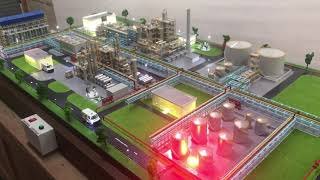
Operating models of power plants, refineries, process plants, and manufacturing facilities that illustrate how each stage works.
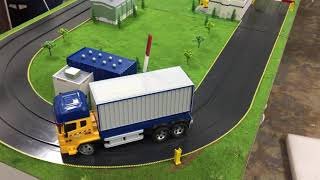
Working representations of machines, mechanisms, and assemblies that show movement, power transmission, and component interaction.
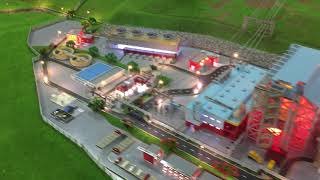
Models paired with touch interfaces that let visitors select scenarios, trigger sequences, and explore information.
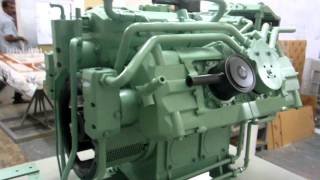
Models that run programmed sequences automatically, ideal for exhibitions, lobbies, and visitor centres.
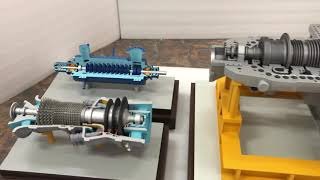
Models that demonstrate control strategies, automation logic, sensors, and system responses.
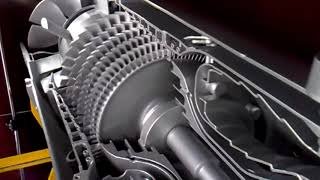
Models of railways, airports, ports, water systems, and transport networks showing movement and operation.
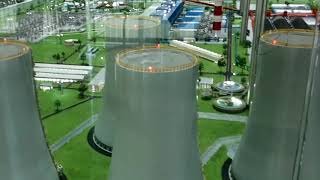
Models that illustrate safety systems, emergency scenarios, and response procedures for training and awareness.
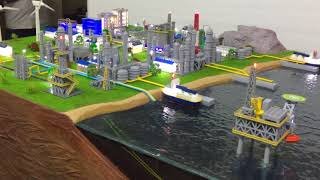
Sectional models that expose internal components while operating, showing how a system works from the inside.
Drawings, diagrams, and videos explain how systems work, but a live physical demonstration lets an audience watch the operation unfold and understand it at their own pace.
A real-time demo model can help show:
Live demonstrations give engineers, operators, management teams, customers, investors, students, and visitors a shared and memorable way to understand how a system works.
They are especially valuable when explaining complex operations to audiences without specialized technical knowledge.
We understand what needs to be demonstrated, the operating sequence, target audience, dimensions, scale, level of detail, interaction requirements, display environment, and project timeline.
Our team reviews available engineering drawings, process flow diagrams, CAD files, control logic, operating manuals, specifications, and reference documentation.
The concept is translated into a digital design that defines the physical model, moving mechanisms, lighting zones, control architecture, and the demonstration sequence.
Physical components are manufactured and combined with motors, LEDs, sensors, controllers, and displays that make the model respond in real time.
The demonstration sequences are programmed and tested, and the model is inspected for scale, component placement, structural integrity, appearance, and reliable operation.
The model is packaged, transported, installed, and commissioned on site. Operator training and handover can be provided depending on project requirements.
The most engaging demonstrations invite people to take part.
Our interactive demo models incorporate control and interface elements that let audiences trigger sequences, choose scenarios, and see the results in real time.
Depending on project requirements, features can include:
These demo models can support training, exhibitions, visitor centres, education, product presentations, and corporate displays.
Show how equipment and processes operate so trainees can learn in a safe, hands-on format.
Walk audiences through each stage of an industrial process as it happens.
Create moving, lit, interactive displays that draw crowds and hold attention.
Give visitors an engaging, self-guided way to understand operations and technologies.
Show product and system performance in a convincing, tangible format.
Present facilities, capabilities, and projects with live demonstration impact.
Illustrate safety systems and response procedures clearly and memorably.
Help students and researchers understand engineering concepts through live physical demonstrations.
Our project portfolio can showcase real-time demo models developed for industrial, mechanical, manufacturing, infrastructure, energy, product, and educational applications.
Each case study can highlight:
| Specification | Customization |
|---|---|
| Scale ratio | Selected according to subject and display space |
| Dimensions | Customized to available space and application |
| Level of Detail | Basic to highly detailed |
| Materials | Selected according to application and durability needs |
| Mechanical Components | Customized component and mechanism representation |
| Lighting | LED zone lighting and indicators |
| Moving Parts | Motors, conveyors, rotating and moving parts |
| Process Simulation | Flow and sequence demonstration |
| Branding | Logos, labels and identification |
| Controls | Programmable, sensor-based, and interactive systems |
| Audio | Narration and sound effects where required |
| Interface | Touch screens, push buttons, and digital displays |
| Installation & Commissioning | Available where required |
Precise Engineering Models supports engineering and industrial organizations with customized real-time demo model solutions across India and international markets.
Our capabilities can include:
For larger and international projects, we consider transportation, packaging, modular construction, power and site requirements, and installation conditions during the design stage.
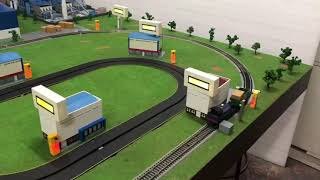
Sustainability is an important consideration in modern manufacturing and product development.
Where appropriate, our approach to demo models can consider:
Designing demo models for durability and upgradability can help extend their useful life across exhibitions, training programs, visitor centres, and educational applications.
Real-time model demos are working physical models that demonstrate how a system, process, machine, or facility operates live, using movement, lighting, sequences, and often visitor interaction.
We manufacture industrial-scale models, industrial plant models, manufacturing plant models, process models, machinery models, product models, working industrial models, cutaway models, and exhibition models.
Yes. Precise Engineering Models specializes in customized working and demonstration model manufacturing, combining engineering interpretation, 3D CAD development, fabrication, electronics integration, programming, and installation.
Yes. We can work with process flow diagrams, P&IDs, engineering drawings, CAD files, operating manuals, and other references to develop customized demo models.
A static model represents appearance and layout. A real-time demo model also shows operation, with movement, lighting, and sequences running live so audiences can see how the system works. Many projects combine both.
Yes. Demo models can include touch screens, push buttons, and selectable scenarios that let visitors trigger sequences and see results in real time.
Yes. Models can run programmed sequences on a loop or on a schedule, which is well suited to exhibitions, lobbies, and visitor centres.
Materials may include acrylic, PVC, ABS, MDF, wood, aluminium, brass, stainless steel, engineering plastics, resin, and 3D-printed parts, combined with motors, LEDs, sensors, controllers, and displays.
The timeline depends on model size, scale, complexity, level of detail, control and interaction requirements, and finishing. Standard projects may typically require 4–8 weeks, while large or highly customized projects may require 10–20 weeks.
You can share drawings, process diagrams, CAD files, operating descriptions, dimensions, desired scale, interaction requirements, intended application, project timeline, power and site conditions, and delivery location.
Yes. Depending on the project, support can include transportation coordination, delivery, installation, testing, commissioning, operator training, maintenance, repairs, and upgrades.
Yes. Precise Engineering Models supports clients in India and international markets, with export packaging, transportation coordination, and installation support where required.
Whether you need a process demo model, plant operation model, mechanical demonstration, interactive exhibit, automated display, or safety training model, Precise Engineering Models combines engineering expertise, digital design, precision fabrication, electronics integration, and craftsmanship to create customized real-time demonstrations.
With more than 20 years of experience, we help organizations transform complex engineering operations into live physical demonstrations that are easier to see, understand, explain, and remember.
We use cookies to improve your experience on our site. By using our site, you consent to cookies.
Manage your cookie preferences below:
Essential cookies enable basic functions and are necessary for the proper function of the website.
These cookies are needed for adding comments on this website.
Marketing cookies are used to follow visitors to websites. The intention is to show ads that are relevant and engaging to the individual user.
Google Maps is a web mapping service providing satellite imagery, real-time navigation, and location-based information.
Service URL: policies.google.com (opens in a new window)